
Letting a property

Letting a property? Keep it safe, keep it legal, and plan for 2030.

For a long let, keep your gas, electrical, EPC and alarm records current, deal with damp and mould promptly and in writing, and plan the work to reach EPC C before 1 October 2030. For a holiday let, the main legal requirement is a written fire risk assessment, which applies however small the property is.

Who you'll speak to

  • Patrick Murphy, PRAVISE co-founder for construction and operationsPatrick MurphyConstruction & Operations

Free first call, 15 to 30 minutes. Fixed fee in writing before any work. No contracts.

What most people don't realise

Sending in a handyman is construction work. Plan it like it is.

  • Letting is a business, so you're a commercial client.When you have work done on a rental, CDM 2015 gives you client duties that an ordinary homeowner doesn't have.
  • Older buildings can hide asbestos.In a property built before 2000, anyone drilling, sanding or stripping needs to know where asbestos is before they start.
  • Small jobs can undo fire safety.A decorator painting over fire-door seals, or a handyman swapping a door or drilling through a ceiling, can leave tenants less safe.
  • If someone gets hurt, you'll be asked about the plan.Who checked the ladder work, who briefed the trade, who knew the risks. Without written answers, it falls on you.

What it can cost you

Liability for injured trades or tenants, enforcement action, invalid insurance claims, and repair bills for work done badly.

How we help

A condition and damp check, a certificate tracker, a plan for EPC C, and a simple checklist for planning every job you send a trade in for.

Landlord Ready£295 per property
Book a free consultation

Opens Google's booking page. Pick a time, Google emails you a confirmation, and we ring you then. Free, about 15 minutes, no obligation.

What you get

A written report you can act on, not a vague opinion.

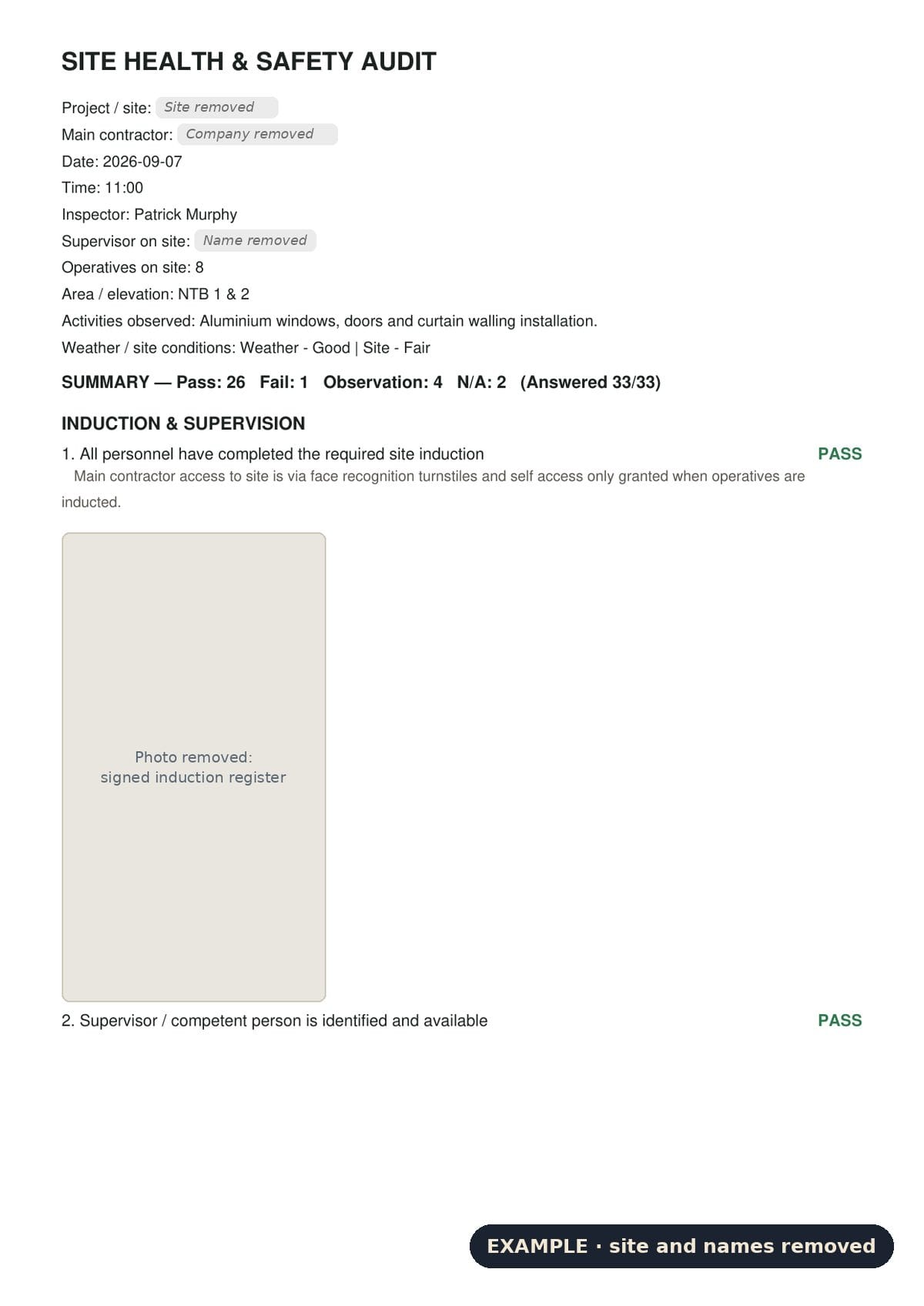
  • What we checkInductions and supervision, RAMS, PPE, working at height, plant and tools, housekeeping, fire routes, dust and actions left over from last time. The site audit shown here covered 33 questions.
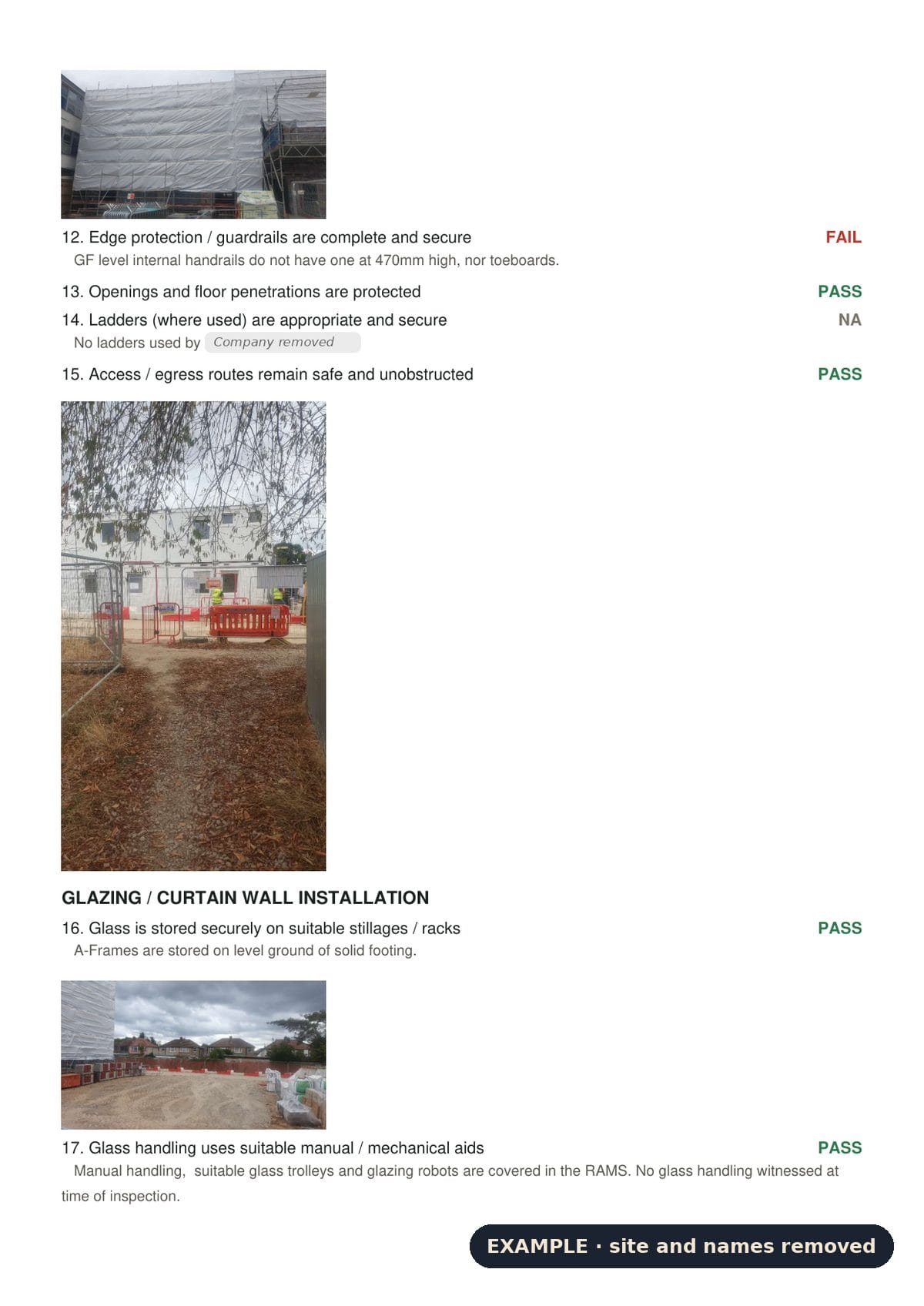
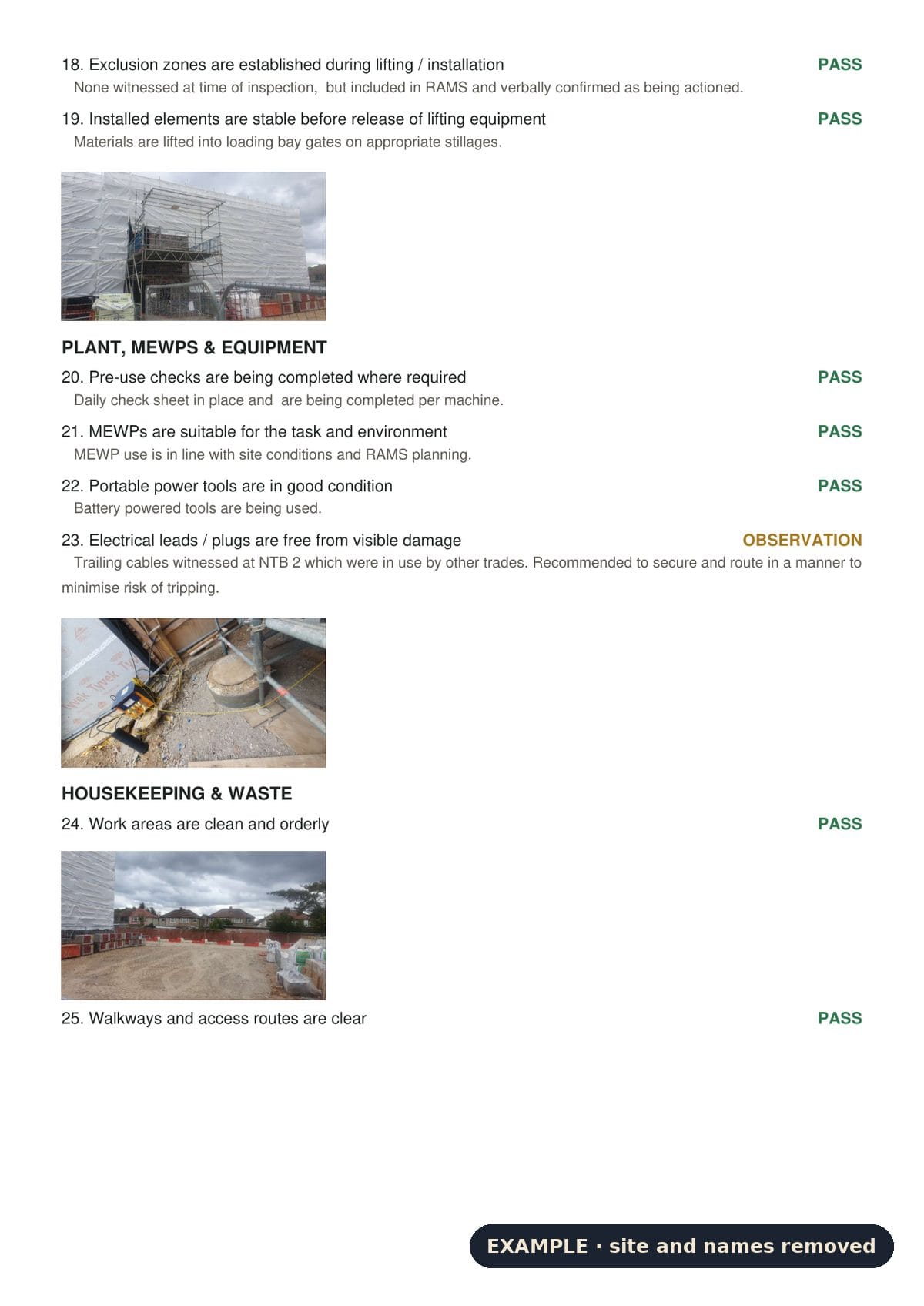
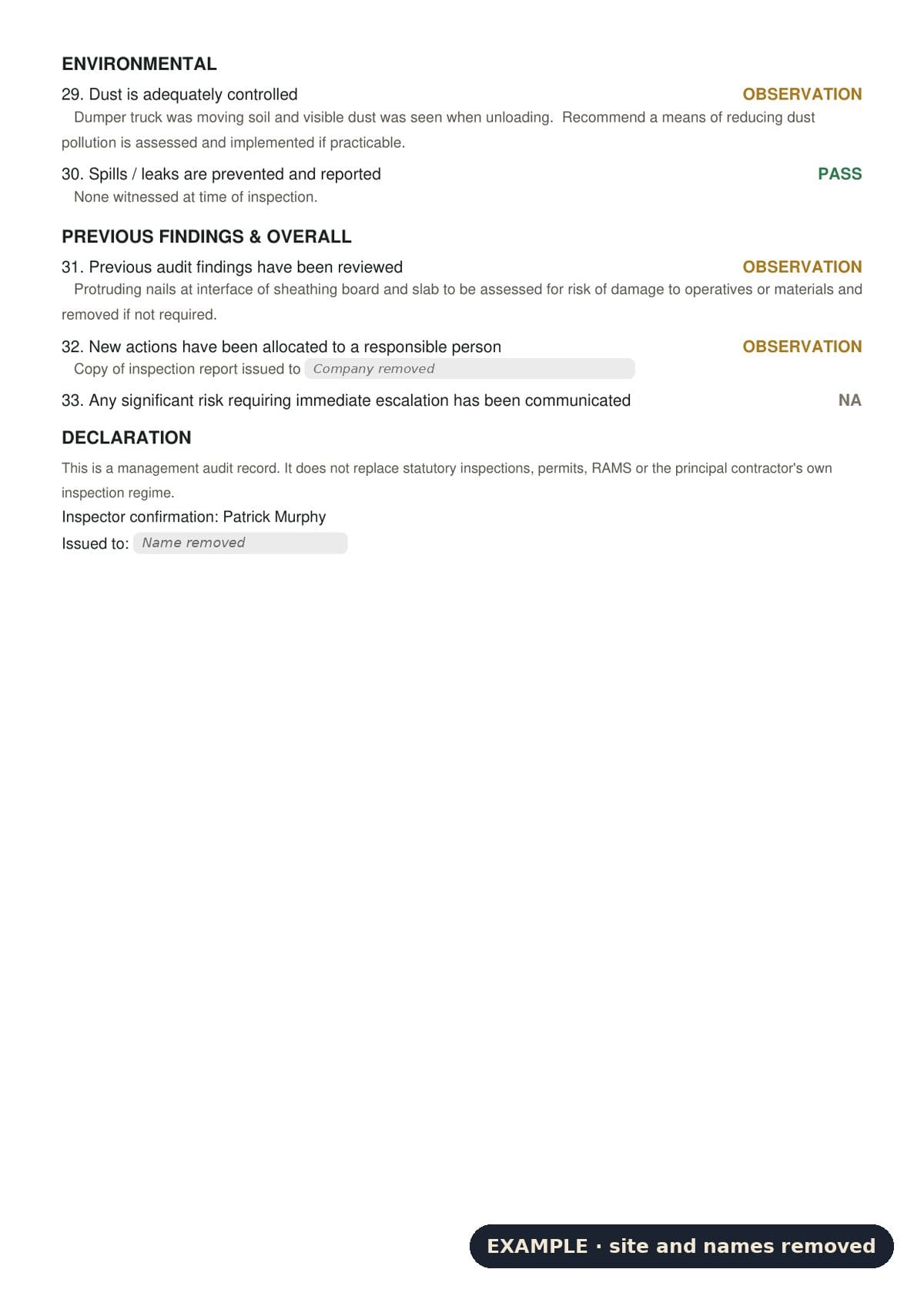
  • What you get backEvery check marked pass, fail or observation, with a note and photo evidence, and a one-line summary at the top.
  • What you do with itPut the fails right first, act on the observations, and keep the report as dated evidence that the work was checked.
Example site audit summary: 33 questions answered, 26 pass, 1 fail and 4 observations, with the site details removedExample site audit page: a fail for missing mid-rails and toe boards on internal edge protection, with photos of the scaffold and site accessExample site audit page: plant and equipment checks, with an observation about trailing cables and photos of the work areasExample site audit page: observations on dust and earlier findings, and the closing declaration signed by the inspector
An example of our site audit format, from a recent inspection by Patrick. Site, company and personal details removed. Tap a page to see it full size.

What you need

The rules that matter most right now.

01

EPC C by 1 October 2030

Confirmed in January 2026 for all private rented homes. The most a landlord can be required to spend is £10,000 per property (or 10% of its value, if lower), and qualifying spending from 1 October 2025 counts towards it.

02

Damp and mould, in writing

Landlords must already keep homes fit to live in. Awaab's Law sets fixed deadlines for social landlords and is expected to reach private landlords from 2027 at the earliest. A dated record of what you found and did is your best protection either way.

03

Certificates and alarms

An annual gas safety record, an electrical installation condition report at least every five years, a valid EPC, a smoke alarm on every storey with living accommodation, and a carbon monoxide alarm in any room with a fixed combustion appliance (gas cookers excepted).

04

Holiday lets: a fire risk assessment

Short-stay homes count as business premises under fire safety law. The Government publishes a guide for small paying-guest accommodation, including a fire risk assessment checklist.

Packages

Fixed-fee packages.

We are not VAT registered, so every price is the total you pay.

Led by Patrick

Landlord Ready

Private landlords with one to ten properties

£295 per property

£245 each for three or more

The risk
Every private rental needs EPC C by October 2030, the maximum fine rises to £30,000, and fixed deadlines for damp and mould are expected to reach private landlords.
What we do
Patrick walks each property, records its condition and any damp in writing, plans the EPC upgrades in order, and gives you a checklist for the trades you send in.
The result
One file per property showing what has been done and what comes next, ready if a tenant, agent or council asks.

What's included

  • Condition walk-round with photographs
  • Damp and mould check, recorded in writing
  • EPC C plan: which upgrades, in what order, against the 2030 deadline
  • Compliance file and certificate tracker (gas, electrical, EPC, smoke and CO alarms)
  • A simple job-planning checklist for the trades you send in (handyman, decorator, electrician): what to tell them, what to check before they start, and what to keep on file

From early 2027

Holiday-let safety pack

Small holiday lets and short-stay homes

£295 per property

£245 each for three or more

  • Fire safety review using the Government's guide for small paying-guest accommodation
  • Fire information for guests
  • Certificate and alarm-test tracker

2026 launch offer

25% off when you book with us in 2026.

Until 31 December 2026

Every client who books with us in 2026 gets 25% off the first package or service they book. In return, we ask for permission to write the job up as a short case study, with your name left out if you prefer.

One discount per client. On Keep Your 5 it applies to the first three months. Ask for it on the first call.

Individual services

Single checks.

Common questions

Straight answers.

Do you carry out EPCs or gas and electrical certificates?

No. Those must be done by an accredited energy assessor, a Gas Safe registered engineer and a qualified electrician. We check that you have them, that they are current and that they match the property, and we plan the upgrade work your EPC points to.

When do my rental properties need to reach EPC C?

By 1 October 2030 for all private tenancies, as confirmed by the Government in January 2026. The spending cap is £10,000 per property, or 10% of the property's value if that is lower, and qualifying spending from 1 October 2025 counts towards it.

Does Awaab's Law apply to private landlords yet?

Not yet. It has applied to social landlords since 27 October 2025, and the Renters' Rights Act 2025 allows it to be extended to private renting, with the timing still to be confirmed. Private landlords already have a legal duty to keep homes fit to live in, so damp and mould should be dealt with now.

Do holiday lets need a fire risk assessment?

Yes. Paying-guest accommodation falls under the Regulatory Reform (Fire Safety) Order 2005, so the person responsible must carry out a suitable fire risk assessment and keep it under review. Our holiday-let pack starts in early 2027; until then, the Government's guide for small premises is the place to start.

Next step

Tell us where you are up to.

A free 15 to 30 minute call. We'll tell you what's needed, what it costs, and whether you need us at all.

Something else?